Russia in a Parallel World
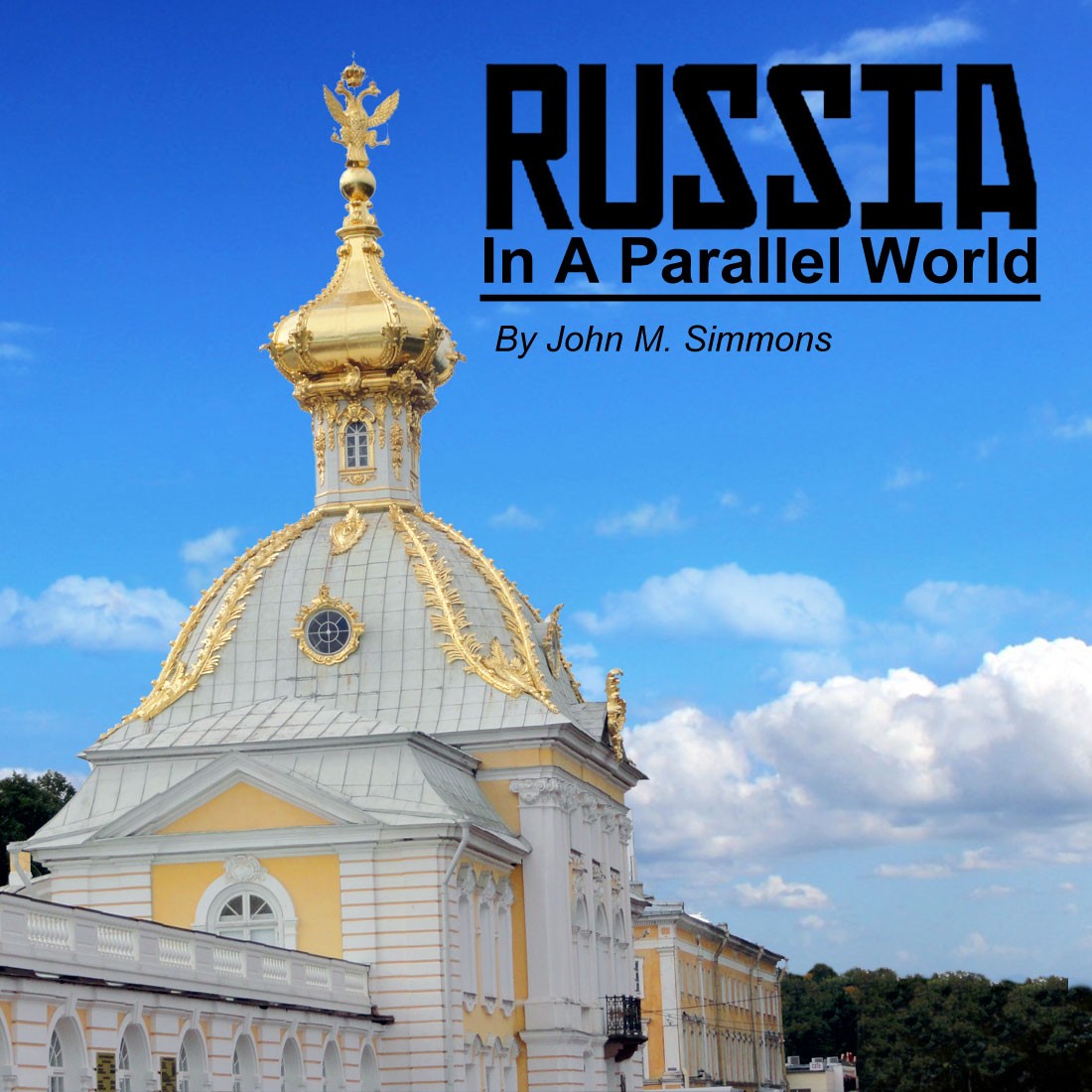
Foreword:
What if nature had turned the tables? What if Russia had been the last surviving Superpower? What if it was the Western economy that hadn't survived and the United States had loaded orphanages with children? What if it were Russians adopting children from the United States? If such were the case, how would people in the United States react when their economy improved? And how would a Russian family feel if adoptions from the United States were banned? Perhaps, in a parallel world, shoes are on the other feet. And if so, maybe the parallel world could help both sides to better understand the other. Picture a Russian born version of me and a U.S. born version of my daughter, Sarah, as you read this short story. After, I hope that you have some empathy for the Russian point of view, even if, like me (and especially Sarah), you still don’t agree.
Russia in a Parallel World
Natasha stood on the coarse-sand beach while watching a boat with bright blue sails leave its thin white wake in an arced line behind it. Early summer had brought long days to the Amsterdam of the north. Soon White Nights would arrive, when darkness never completely showed its face.
The fourteen year-old girl loved St. Petersburg. In fact, she loved everything about Russia. Her favorite place in the world was Lake Neva, where her father and mother often brought her and her sister to swim and to play on the beach. Papa had told her it was better now than when he was a child. Then it had been a salt water bay. At that time it was considered far too polluted to be a good place for swimming. The St Petersburg dam had been a massive accomplishment, originally constructed to prevent the flooding of the city during storm surge. It also served as a massive six-lane highway that had completed the missing link of the outer-ring-road that now surrounded the metropolis.
Global warming had altered the environment. Climate change raised the oceans more than a meter and a half since scientists had become concerned two generations earlier. The temperatures in Russia had climbed eight degrees since that time. A series of dikes and the re-purposed twenty-five kilometer complex of eleven dams were now used to hold back the rising ocean from St. Petersburg. The system was based on those dikes and dams first implemented by the Dutch. The combined results of the massive Russian construction project and the heavy flows of the Neva resulted in the constant washing of the water and the transformation of a polluted and salt laden bay into beautiful Lake Neva.
Global warming, for Russia, had not been a bad thing. Millions of square miles of what had formerly been Siberian wasteland became available as virgin soil that had never been depleted by regular cultivation and harvesting. Siberia, with its mammoth six wheeled articulating tractors, endless fields of towering corn, and amber waves of grain, was now the undisputed breadbasket of the world.
Natasha was proud of her city, her country, and its accomplishments. What wasn’t to like about living in the last superpower left in the world?
Russia had always told its people that capitalisms could never succeed long-term. When people were selfish and motivated only by personal gain, Darwin’s theory became prophecy-fulfilled. Survival of the fittest. In the United States, the houses of the rich became brick and mortar mansions, surrounded by manicured yards. The all-but identical siding and shingles of track homes ceased to be owned by their occupants as they evolved into yet one more thing for the rich to sell and rent. Soon, the poor owned nothing; not even their meager lives. Those were sold a day at a time for subsistence. How comparable the United States had become to what Russia was before its peasants retaliated with the wars that began with the October Revolution. No one in Russia was surprised with the financial collapse of the United States. Natasha tried to remember who it was that said; “Those who cannot remember the past are condemned to repeat it” while she watched gulls float in a cloudless azure sky.
Small waves washed onto the shore wetting Natasha’s bare feet. Ten-year-old Sasha squealed in the background as her father chased her along the beach and their mother cheered him on. It was times like this when Natasha felt alone. Unlike her older biological sister, Sasha had very few memories of her former life in an orphanage, and they were all pleasant. At one point, the director at the foreign orphanage had planned to adopt her. Then tragedy struck. Her husband experienced a medical emergency and was now confined to a chair. The right side of his face now drooped and his right limbs were stiff and weak; all but useless. The director’s dream of raising little Sasha ceased to be a possibility. With that, Sasha became the orphanage pet who ruled over the other tiny orphans like a tyrant princess. Sasha was strikingly beautiful as a child and it was very apparent that she would be stunning as an adult. Her uncanny flowing blonde hair, deep blue eyes and playful personality were substituted as often as possible for studying, work or a deep personality. It made Natasha uncomfortable that her younger sister never felt like she had to compensate for where she had come from. It wasn’t so easy for the older of the two girls. Even to herself, she always felt as if she had to overcompensate to prove loyalty on every level.
When Sasha asked their mother if she thought their birth-mother might be nice, now, or if she might see her again, Mama was unthreatened and only responded with pleasant possibilities. When that happened, Natasha would fly into a rage. “You are stupid, Sasha! She never took care of us! Don’t you remember? We were always hungry! We never had clothes! She would grab our hair and beat our heads on the ground! We’d be dead if we stayed with her! I hope she’s dead now!” Such outbursts always resulted in punishments for Natasha. That infuriated her. She would stomp off to her room and slam the door where she could spend an hour thinking about why she was punished for being the one most loyal to her new parents; her real parents. Natasha hated her birth-mother. She hated the wretched place she had come from. She wished she could forget it. She wished she had never lived anywhere but Russia. She wished that she and her sister had been born into the family that was now their own.
Even Natasha’s parents couldn’t understand. They wouldn’t understand. Natasha’s papa worked in international sales for a mammoth agricultural company. In recent years he had spent more and more time in Mexico where global warming had devastated farming. He oversaw the shiploads of wheat and corn exported to that strange place across the ocean, so he spent more and more time in that country. And Natasha’s papa could never leave that side of the world without visiting the place she hated more than any other.
He loved those visits, though. He loved the friends that he met there and he was almost addicted to studying the place Natasha only wished she could forget.
Several years earlier, Papa had been watching a television program on the history of the horrible country. Natasha loved to sit on the warm, dark leather couch and watch TV with her papa, but she refused to view the program that had stolen his attention. Finally, after more than half an hour of passes to see if it was over—and growing angrier every moment that it continued—Natasha planted herself firmly between him and the television. Her voice and body shook while she spoke louder than was permitted in the house. “Papa! Why do you love Amérika?!” She stood strongly, defiantly, and in terrible majesty as she waited for an answer that couldn’t possibly be adequate. Natasha didn’t care if she was punished. Her papa owed her an answer.
Papa clicked off the television with the remote. His shoulders sagged and he and looked down at the floor. He finally thought he could understand his daughter’s feelings. How could he love something so deeply that had hurt her so severely? Natasha watched as her father shook his head back and forth ever so slowly. When he raised it, tears filled his eyes and rolled down his cheeks. “Come, Natasha,” he said while stretching his open hand toward her. “Please. Please come and sit next to me.” The girl stood trembling in place and refused to move while awaiting the answer she believed she deserved.
“WHY?” she shouted.
Papa clenched his hands and looked down while placing them in his lap. He remained in that position, unmoving for several seconds before raising his head. When that happened more tears flowed. “I love Amérika because Amérika gave me you.”
Natasha ran to her father, threw her arms around his neck and clung to him tightly while she sobbed.
That was the first time Natasha was ever able to allow herself to think anything good about Amérika. Her feelings had begun to soften and after years, she could tolerate it when her parents said good things about the country of her birth, even though she was never comfortable with such discussions. But now the United States had done the unthinkable; the unforgiveable. And Natasha’s papa was forgiving them again!
By their own selfish actions people in the United States had caused the conditions which resulted in the long, drawn-out withering economy that had overcrowded their orphanages. Whiskey, in that country was cheaper than bottled water. Who could be surprised that such a place would be filled with abusive single mothers who battered and neglected their children until the state had no choice but to take them away?
Natasha’s father didn’t realize how carefully she had listened as he watched news programs with lay-people and politicians in the United States decrying the evils of Russia. Over a course of twenty years, tens of thousands of children had left the United States for homes with loving parents in the land of their former enemy. There had been a few cases where these children had been abused. Nineteen had died under at least questionable circumstances and the sentences Russian courts imposed on murderous adoptive parents were wildly inconsistent. A few were adequate, but other parents, obviously guilty, “walked” on technicalities. Everyone knew that such failures were a necessary evil in any country that tries to preserve rights. People in the U.S. were indignant, though, and their politicians whipped them into a frenzy using media that overwhelmingly held to the opinion that American children should never have been sent to Russia.
The majority of the people in the United States had never agreed with their government allowing little U.S. citizens to leave their native land for a life with new parents in another country; another culture. The citizens had considered the policy a cop-out by politicians who refused to provide for the least fortunate of U.S. citizens; children who were not being cared for. The total economic collapse of the West, though, had left little choice. Russians were happy to add to their families by rescuing children from U.S. orphanages.
Natasha had been furious with accusations from the United States implying orphans from that country would have been better off to have stayed in the land of their birth. Were the Americans stupid? Why wouldn’t they look at her? Why wouldn’t they look at her little sister, Sasha? Why didn’t anyone in the United States talk about her new mama and papa and the wonderful home that they had provided? Why couldn’t the United States understand that there were so very few deaths and abuses that had happened in Russia? It was a statistical blip! There were far more cases of abuse and death in their own orphanages and adoptive homes, than had ever happened to children adopted internationally by Russians.
Still, the United States moved forward in their demands to have access to all U.S. citizens who were minors, to be able to interview them and see if they were being abused. Natasha was livid. She hated that she retained her U.S. citizenship along with her new Russian one. She wanted to be Russian and only Russian. She had told her papa that she would throw away her citizenship to her country of birth. He told her that was impossible until she turned eighteen, and even then, he hoped she would never renounce her citizenship to either country. How could her papa say such a thing? She told him she would never talk to investigators from the United States. It was Amérika where she was abused, not Russia! She wouldn’t talk to them. If they wanted to know if she had been abused, they could go back to the United States and talk to her birth-mother. That is where they would learn of abuse! Natasha’s papa told her that there were laws in Russia and that the Americans could never force them to be interviewed, but that they had nothing to hide. He had no problem with any member of their family talking to officials from the United States, no matter how strange it seemed to answer to a foreign government. They had nothing to hide. And if such interviews could calm down the Americans and allow the positive international adoption climate to return, Natasha’s papa thought they should submit. It would be worth it to allow more children to have homes and families. Natasha’s papa said he didn’t believe in borders when it came to children and families. So, what would it hurt to talk to the Americans? Most Russians who had adopted didn’t agree. The United States had no right to walk onto Russian soil with the purpose of interviewing Russians. Of course they had nothing to hide, but their government had procedures in place to deal with them if and when they broke laws. They were Russians and they refused to answer to Americans! If the United States was so concerned about these children, why had they ended up in orphanages in the first place?
But the United States was concerned and refused to accept what it considered paper-thin excuses for an inept legal system. They held to their demands to be able to interview the new family of every child who had been adopted from that country. If their demands for access were not met, they would cease to allow children to be adopted by Russians. There would be no compromise on this issue. The United States believed that it had the right to protect its citizens, no matter where they lived. The Russians tried to explain that such access violated their constitution. Even their own government did not have access to perform such interviews without cause. They couldn’t violate their own constitution. In a nutshell, they told the Americans that they should have thought about access to these children before they allowed them to become Russian citizens. In essence, the United States had vowed to never make the same mistake again.
Natasha’s feeling towards the arrogance of the Americans had been more extreme than the average Russian’s. And now, as she stood on the beach looking out over Lake Neva, she knew she could never forgive her native country. Only the day before, on Saturday, Natasha’s family had received the news. On Friday, The President of the United States had signed into law a new bill that would forbid Russians from adopting children from the United States. Saturday had been an emotional day at Natasha’s house. Her mother was distraught. All she could talk about was all of the little children that she had seen in the orphanages and how so many of them would never get homes. Papa, on the other hand, always tried to look at both sides. Natasha hated that he refused to commit to Russia’s position. He said that both sides were being unreasonable and that the politicians were too hotheaded. Papa claimed that things were getting better in the United States. Their economy was doing very well, now. Americans had turned to their orphanages and many children had been adopted. They were now adopting older children and children from different races, just as Russians had been accustomed to doing for decades. The U.S. government was now fiscally stable and they were in the process of establishing welfare programs including foster family programs, where the government could reimburse families with the expenses of bringing a foster child into their home, to raise them in a family setting. Natasha’s papa insisted that he had been to the United States many times and that he had watched things change. He was encouraged with the progress. He was confident that the people in that foreign place would eventually be successful in caring for their own children. Amérika was the land of his friends and he knew that his friends loved their children. They loved their country. They only wanted what was best for their own and he knew that they were capable.
Natasha didn’t agree. Her papa could talk all he wanted to. Had his birth-mother beat his head on the ground? Had she starved him? Had she kept him naked in a dirt-floor shack until he was five, when the government took him away? Had her papa lived in an orphanage? No. Papa would never understand. On that Saturday, when Mama cried and talked of the hard-heartedness of the Americans, and as her papa tried to help the rest of the family to see both sides, Natasha became more and more angry. Later that evening, she stood outside the doorway while blue shadows reflected and flashed on the walls and ceiling. Finally she gained the courage, stomped into the room and waited for him to turn off the television.
“Papa, you are wrong. Amérika doesn’t take care of children. Russia does. They should never make laws saying children can’t be adopted by Russians. I will never forgive Amérika.”
Her father nodded slightly and tears filled his eyes. “I know, Natasha.”
“You are wrong!”
“I think you are growing up Natasha. We don’t agree. We don’t need to. But part of being an adult is trying to understand someone else, even when we don’t agree.”
“Do you really think it is good that Russians can’t adopt from Amérika anymore? Can you honestly say that?”
“Oh Natasha… I never said that. I am only trying to see things from the American point of view. That is the only way I can be fair.”
“So do you think that Russians should be allowed to adopt children from the United States or not?”
“My sweet daughter… You know I don’t believe in borders when it comes to children having homes.”
Natasha threw her arms around her father and they cried on each other’s shoulders. Then he asked her if she would like to spend Sunday on the beach.
Now, as tiny waves rippled onto the coarse sand, Natasha listened to the squeals of her younger sister mingle with the barkings of the gulls in a perfect sky. Finally, she thought she could understand her papa. But she would never, ever, forgive Amérika.
Afterword
There are those who will condemn my political views after reading this story. But my views were not made known in what you have read to this point. The story was concocted merely to help two countries that I love, to try to understand each other’s views.
Let me be very clear. I love the United States far more than any other place I have ever been. I love the freedoms that we enjoy here, and particularly the freedom we have to speak out when we don’t agree with our government and leaders. I am not an advocate of communism, or
even socialism. I am tired, though, of feeling like I need to associate with a political extreme merely because I disagree with the other extreme.
I do not affiliate with any political party because I have not found one that represents my views. While there are values I share with each of the two major political parties of the United States, on the whole, I have very strong disagreements with both of them. While one would have us continue down the path of the extreme economic divisions that led Russians to the October Revolution, the other would like to offer—as an alternative—entitlement programs to a degree that bankrupted the Soviet Union.
I mourn the loss of days when our founding fathers believed that being a politician meant unlimited self-sacrifice. I long to return to the ideas our country held when it was time to replace our first president; that anyone who wanted the job was not worthy of it.
I love Russia and I love the United States of America even more. I don’t agree with either country all of the time and I’m sure I never will. While I love both of these countries, my love for children surpasses my feelings for any nation. And if I live a million years, I will never, ever, believe in borders when it comes to children finding homes.


I was not aware of this charity work going on for orphans in Russia! A year and a half ago many of the U.S. based charities were expelled from Russia after some of them started taking political positions and making comments about Russian elections. I know because we were in the process of trying to establish Program Chance in Russia to help Sarah's friends. We were flatly denied. I remember being broken hearted at that time. As people working with me asked me if my family would be willing to put the money into the same program in another place, It tore out my heart because I knew that we would never get to Sarah's (and my) friends in time. Still, I knew what we needed to do. I remember promising God that I would help children that He loved, and begged Him to help the ones that I loved. God bless you for helping children in Russia. They need it so much!
Program Chance ( http://elelembra.org/programs/program-chance/ ) has been established in the Republic of Georgia to help orphans and other disadvantaged youth as they age out of Government sponsored institutions and into the real world. I met some of the participants for the first time last December, and while my heart still aches for my little Russian friends, God opened my heart and I feel every bit as much love for these wonderful children in Georgia that I do for my friends in Russia.
Thank you for what you do to make the world a better place for children.
Interesting concept. I appreciate the opportunity to read it. What a difference a sway of the earth can make. Thanks for sharing. It really made me stop and think. Thanks