To Sing Frogs Chapter 31b
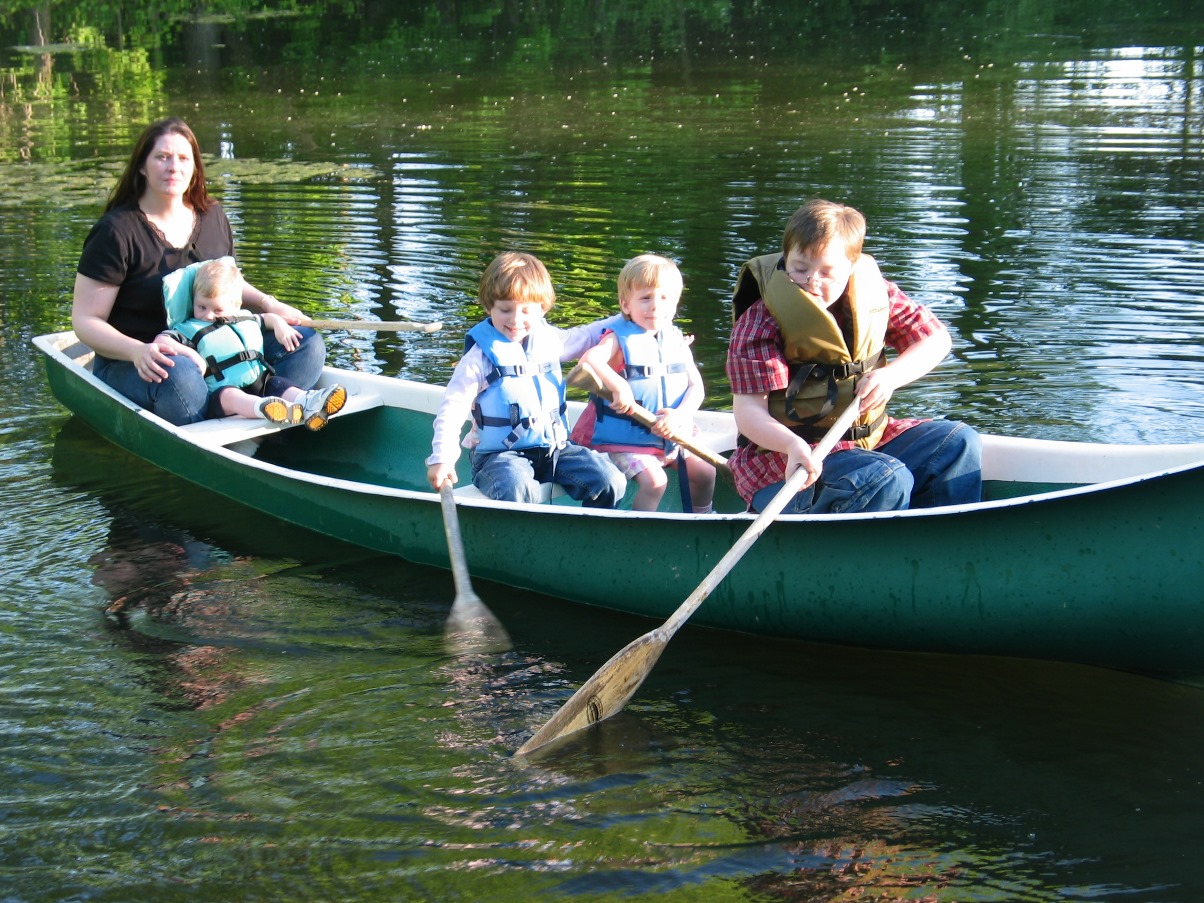 Amy and Denney, Sarah and Celeste, and Jack taking a ride in the canoe in the pond behind our house in Michigan
Two months blurred together. There were fishing trips to the pond behind the house that yielded everything from three-inch sunfish to two-foot bass. We casually floated on paddleboats while rays of sun flickered through the leaves of Oaks and Black Walnuts. Dasha splashed along the shore, barking at us to come back for her. We went on slow bumpy horseback rides and slid around corners of dirt paths on the quads. We jumped on trampolines and rode bikes on the blacktop around our circular drive.
There were lots of firsts. First boat rides. First ice cream cones. Their first tornado warning came while I was at work. We even celebrated first birthdays. Denney had his first real birthday in June. It happened for Celeste in July.
“Mama, birfdey Sadah?”
Amy took Sarah to the calendar hanging above the built-in desk in the kitchen. She pulled it down and counted out the months while lifting pages one by one. “This is July. Grandma’s and Aunt Michelle’s birthdays are in July. Then comes August. Papa’s birthday is in August. After August is September. Uncle David and Aunt Rachael have birthdays in September. After September comes October, that’s when Uncle Tom’s birthday is. Then there’s November and our family doesn’t have any birthdays. November has another big party though. The next month is December. In December I have a birthday and then it’s your birthday.” Amy drew a big star on December seventeenth. “That is your birthday.”
“Sadah birfdey now,” she responded sternly.
“Sorry, Sweetheart. This is your birthday,” Amy responded while tapping the newly starred square on the calendar. “You have to wait.”
Sarah sighed and walked away dejected. It’s funny the things that are missed when a child comes into a new culture. Over four years later—when Sarah was winding up for her tenth birthday—she would come to Amy asking how people knew when their birthday was. One of her friends at school was actually born on their birthday! How cool was that?
I backed off my travel schedule and assigned the task to others. I limited my time at work to forty hours so I could spend more time with our new children. It was great. Life kind of got back to normal. At least it did for me.
Not so for Amy. There was 50 percent more time doing dishes. Fifty percent more on baths. Ninety percent more time spent on hair. Fifty percent more laundry to do. Four-hundred percent more quarrels and infinitely more “stitches tantrums.” She accomplished it almost all during the workday, insisting we had time together as a family during evenings and weekends. I still don’t know how she did it. That’s not true. I do. She redoubled her efforts. Then she did it again. She worked harder. She worked smarter. She gave up anything she valued if it wasn’t about developing her family.
When she realized it still wasn’t enough, she drafted the older boys into the service. We depended on them. When they slipped, it affected the whole family. Their actions or their lack of action had immediate repercussions. The boys saw the results of their efforts. They rose to the occasion like I never imagined they could. They washed, dried, folded and put away laundry. They scrubbed pots and pans after washing dishes. They vacuumed, dusted, swept and mopped, then returned to their mother to find out what else was needed. They cared for their buddies. Mike and Celeste. Cory and Denney. Steve and Sarah. They helped with dressing their buddies. They kept track of them during excursions. They carried them on their ever-broadening shoulders. Steve was more than a little top-heavy with Sarah, but he insisted it was part of the calling. The littlest kid always wants to do the biggest job.
Jack ran around newly remodeled rooms, through hundred year-old halls, and up and downs stairs between all of the newcomers. He got drinks and snacks for his new siblings whether they wanted them or not. He tried to carry Sarah like he remembered Mike and Cory packing him. It didn’t work. He tickled his little brother and sisters then insisted they tickle him. Though he could have easily overpowered them he never did. He’d lie on his back and roll from side to side giggling hysterically while the little ones ganged up and tickled his ribs.
When you move from a Russian orphanage to the Simmons house you not only learn to adapt to North American culture, you also adapt to “Jack” culture.
“Sarah, we sing Rudolph Red Nose Reindeer.”
“No Djeck. No sing now.”
“Yes. Sing now. You sing. I sing. “♬ Rudolph Red Nose Reindeer, had very shiny no—♬ Sarah, sing! Jack and Sarah sing Rudolph.”
“No Djeck. Sadah no sing now.”
Sometimes he got her to sing. Other times he didn’t. Christmas song teacher is a tough job to take on in mid-summer. Finally he demanded we all sing together. Sarah needed to learn Rudolph the Red Nosed Reindeer before Christmas. There was no time to waste.
Russia hides children like Jack away in their own institutions. It was understandable that Sarah was a little standoffish the first few days. That was all it took. He quickly became her favorite. Everybody should have a big brother like Jack.
It’s amazing to see what kids are capable of when they’re needed. Our country would return to its glory of yesteryear if only we expected our children to be what their forefathers were.
Go to other sections of To Sing Frogs
Go to John M. Simmons’ blog
Comments
Leave a comment