To Sing Frogs Chapter 20a
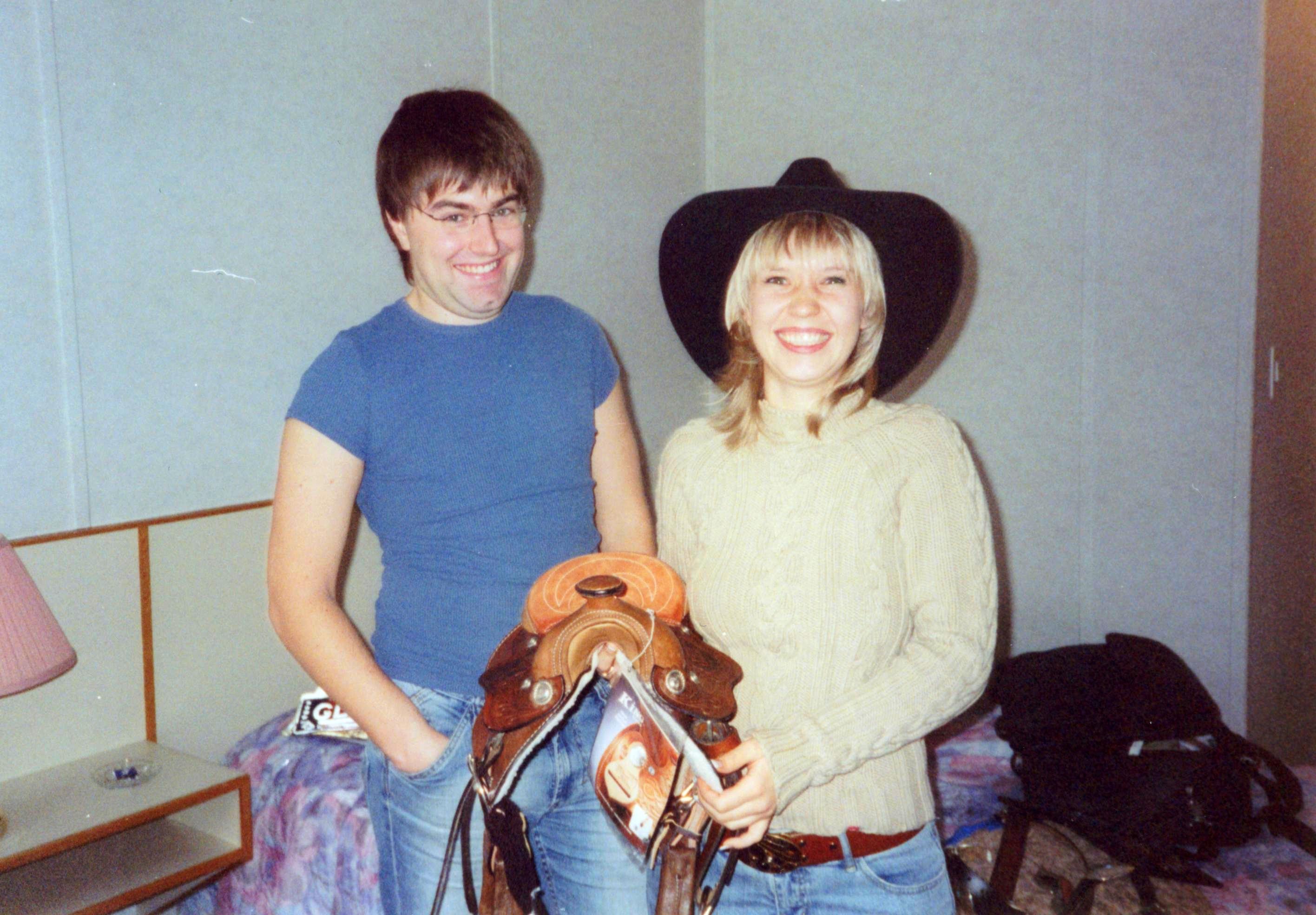 Stass and Anya with Western gifts we brought from the states.
Chapter 20
Shattered
“Wait a minute. Read that part again.”
“For these two daughters, she should pay 1/7th of her total income to the State for child support.”
“No. Before that.”
“In accordance with the court decree of July 1, 1998, the defendant was forced to pay child support to raise her five children, in the amount of one-half her total income.”
“No! No… How could this possibly be happening?”
Amy looked up with wide eyes. “There are five more siblings.”
“No! How didn’t we know it before? How did we miss that? How didn’t we know?”
Amy and I had gotten up early and taken some fruit from the hotel restaurant back to our room for a working breakfast. We were now perched at the desk neck-deep in documents. Hours had been spent scouring every scrap of paper we possessed that had anything to do with adopting Katya, Luba, and Kirrill.
Stass and Anya counseled us to be well prepared for the court proceedings scheduled for later in the afternoon. Sometimes couples flew through the questioning portion of court with ease and little challenge. In other instances judges and prosecutors were more aggressive.
Today, odds tilted toward rigidity. An Illinois woman had just been let off with manslaughter. She had been tried for beating her adopted Russian child to death six weeks after bringing him home. There was a good chance we would have to convince the court they weren’t sending children into the same environment their own social system had removed them from. A child had been beaten to death. The abuser got an imaginary twelve years. She’d be up for parole in three. I was disgusted. The Russians were flabbergasted.
Even before this current event worsened the storm over Russia to U.S. adoptions, Russian judges had expectations. Adopting parents were to have spent time learning about the children they planned to add to their families. Parents might be asked the middle name of the child, their birthday, how long they had been at the orphanage, or any other obscure information that had been provided in documents. We knew being over-prepared wouldn’t hurt us so we had dedicated ourselves to spending the morning memorizing every detail of our intended children’s former lives. My concerns from two nights before were superseded. This new revelation and all its implications now consumed me.
I stood up and began pacing the room. It hadn’t been serviced yet and the bed that was still made was littered with towels. The one we slept in had not been touched since we got up. Empty plates and juice glasses covered the desk. We had to have seen the ominous document before. There was no doubt we had read this information—at some point in passing—and just overlooked it. There was no ignoring it now. Oksana Arsentyevna Koshkina had birthed a total of seven children. Katya and Luba were only the last two.
“What are we going to do now, Amy?” I asked forcefully. My shoulders slumped and my face bowed to the floor. It was as if a wrecking ball had been hung from my forehead with a chain. Then my voice weakened and faltered. “Just what are we supposed to do now?”
My wife didn’t answer but she rushed through stacks of paper searching for the Social Reports on Katya and Luba.
She quickly separated them out from the piles. Amy briefed through Katya’s until coming to line number seven. She carefully read the information she was sure she had seen while scoring an imaginary line underneath the sentences with her finger. Then she went to Luba’s Report. “They are the same except for the names.‘7: Please list the full names, locations, and dates of birth of ALL of child’s siblings:’ The word all is typed in all capital letters. Then it says, ‘sister: Ekaterina Anatolyevna Koshkina, born on 12-17-99, resides at Baby Home of Partizansk.’ That’s it. No more names. No more information.”
Link to other sections of To Sing Frogs
Link to John M Simmons’ blog
Comments
Leave a comment