To Sing Frogs Chapter 24a
Chapter 24
Weight
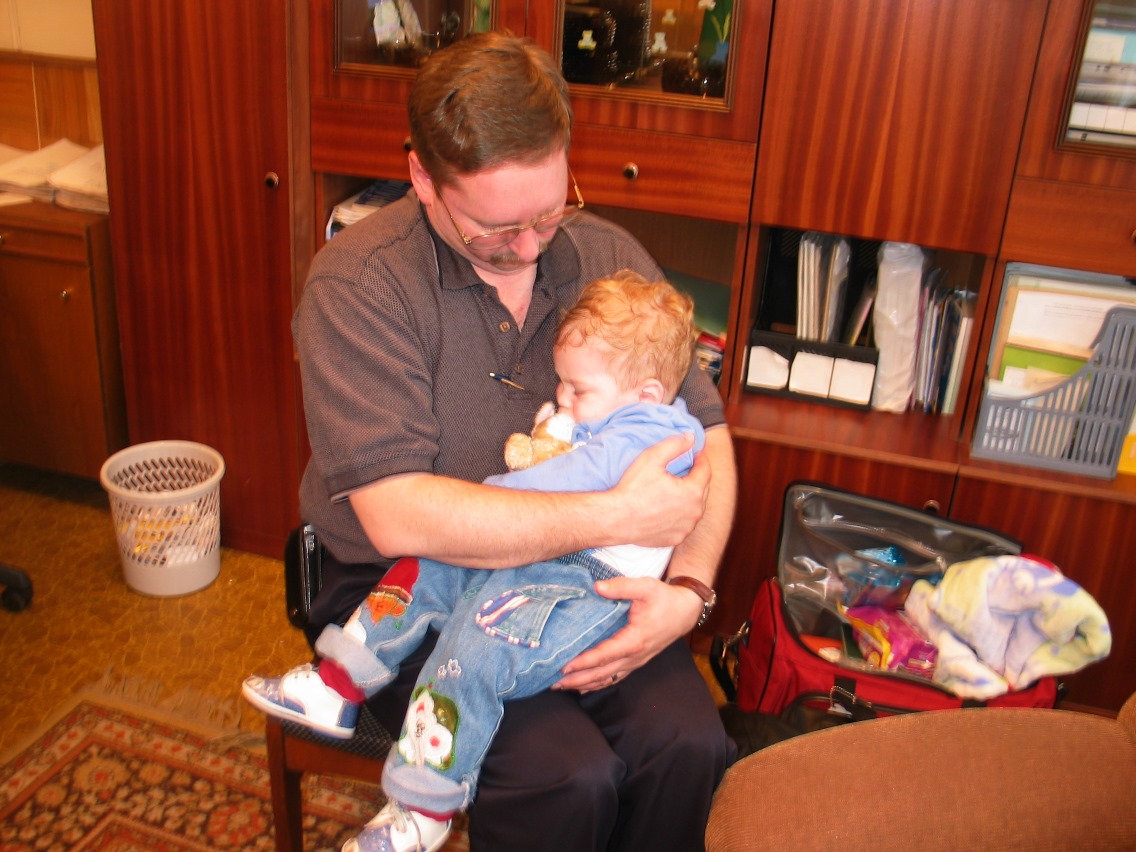
Kirrill still looked drunk. Amy said I was crazy. She said it didn’t make sense. That’s irony; Amy calling me crazy because I thought something didn’t make sense. I didn’t care if it made sense or not. Facts are facts. That little toddler was three-sheets-to-the-wind.
It was good to see him though. Having the girls would have been like floating on clouds if it wasn’t for missing Kirrill. We asked his social worker to allow us to take him like Marina-Grigorievna was letting us take the girls. Marina-Grigorievna knew what the intent of the law was regardless of how she tried to reinterpret it. If Marina-Grigorievna chose to stick her neck out even though there was nothing in it for her that was her choice. Kirrill’s social worker would do no such thing.
It was now Monday morning. Dyehdushka Bill volunteered to stay back at the hotel with the girls. We sped north through hours of two-lane roads. They twisted through hills, hardwood forests, and peculiar villages. Amy and I were both anxious to visit our new son.
We now sat in the abandoned playroom of the Ussuriysk Baby Home. It was hard to imagine at times there were children crowding this area. Whenever we visited they were always sequestered away. Amy cuddled Kirrill for a while. Soon we were looking out the window for oof-oofs. Then we played with the bubble machine. We tried to bounce and play and run. It proved difficult for Kirrill and his twenty-pound head.
“I can’t force you to believe it. He’s drunk, though.”
“He’s just tired. Why would he be drunk?”
“I don’t have an explanation for why. I only know the fact.”
“You’re a cynic.”
“Guilty as charged.”
“Come on little guy,” she said while she picked up our son and hugged him against her. “Don’t listen to your daddy right now. Sometimes he’s mean.”
“Enabler!” I couldn’t resist.
“What?”
“We need to get him into a twelve-step.”
“You’re sick.”
Yeah, okay, I’m mean. I’m sick. What father isn’t? Why couldn’t my wife look at the evidence rather than trying to find a reason for facts not to exist? Why couldn’t she add the signs together and come to the logical conclusion? Some things just are, whether they make sense or not.
I let Amy cuddle our son and I studied the painting of the fairytale and the birch-bark puppet stage—implements of make-believe.
Soon my wife was sitting on the piano bench with Kirrill on her lap. She placed his hands on hers and began playing music; music I hadn’t heard before.
“Tchaikovsky?”
“Ha-ha,” she said sarcastically. “It’s just something I’ve been working on.” Amy continued to play. Kirrill was almost hypnotized with the music. He smiled and let his hands float on hers as they glided up and down the keys. “While I wait for spring to come,” she began to sing mid-verse, “blow me kisses through the sun. And I believe, yes I believe, you’ll come for me.”
“That’s beautiful!”
“Thanks.”
“Is it finished?”
“Not even close. That doesn’t mean we can’t play though. Does it Kirrill?” He ignored her voice. His concentration on the music was unbroken.
The accompaniment was rich but melancholy, almost haunting. The upper hand plinked happy and simple notes reflecting childhood innocence. When the sounds were combined they filled the large room with feelings that simply aren’t supposed to be experienced at the same time.
After an hour or so with Kirrill, Stass came back into the room and asked if we could leave. He had some commitments in the afternoon.
If leaving children in the orphanage is painful before court, after that event it’s like pulling out your fingernails with pliers. That’s what you do though. It’s all part of the waiting. Amy cried. I was numb. We each hugged him and kissed him and told him goodbye. We promised we would return. The promises were for us not for him. Kirrill was young enough he wouldn’t understand even if the words were translated. Within seconds the friendly grandma carefully took our son from his mother’s arms. The only thing keeping Amy together was she knew he was ours now. Nothing could take him away. Or so it seemed at that moment.
I faced the stained glass butterflies without flinching on the way down the stairs. I had made the decision to leave Marina and Yula where they were. While it was my right to choose my actions it was not for me to select consequences. Had I been in front of a firing squad I would have wished they would just get it over with. Unfortunately, in this case I could foresee no end to the pain.
Go to other sections of To Sing Frogs
Go to John M. Simmons’ blog
Comments
Leave a comment