To Sing Frogs Chapter 9c
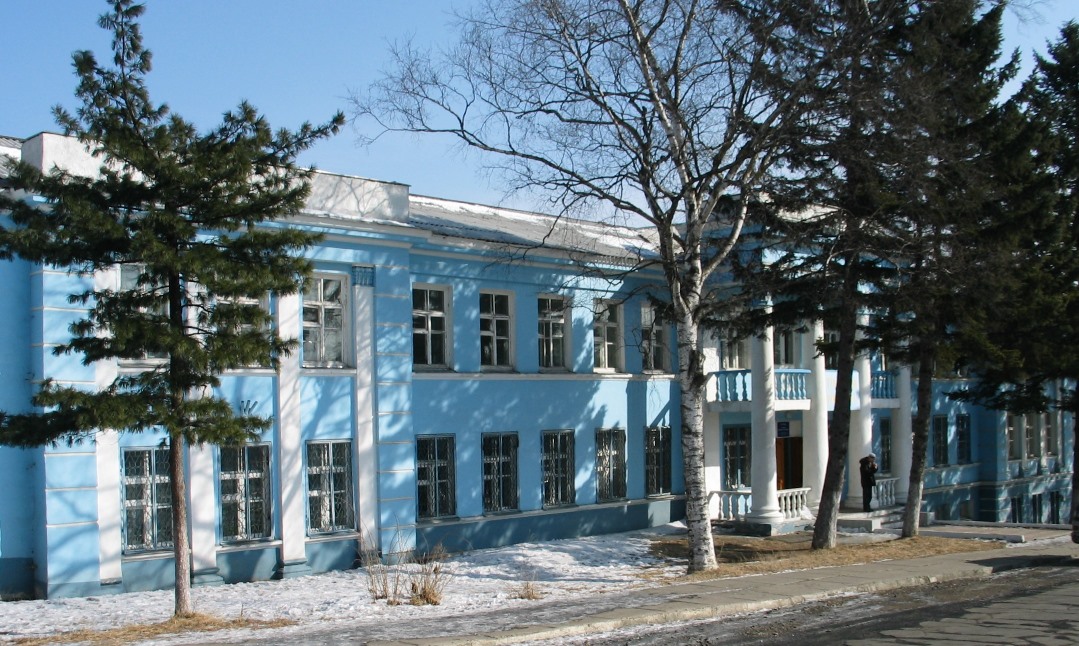 Partizansk Baby Hospital, Where Celeste Lived.
Marina-Grigorievna was the social worker assigned to Luba and Katya. She was the one who should have been required to sign the letter of recommend before we saw Katya.
To me, international adoption was beginning to feel like time travel, or at least dimensional travel. People slip from one area—almost through a portal in a fantasy movie—and exit into another world. Hopeful parents appear and disappear from Russia—and other places just as unlikely. Children vanish from these places never to return. Then they rematerialize in locations they can’t even comprehend. In the region where we found ourselves, Marina-Grigorievna was the gatekeeper to the portal for such magical travel.
We watched anxiously as Stass disappeared into the social worker’s unassuming office building. Though the edifice seemed plain, even obscure—like a hidden door at the back of a closet—its importance could not be ignored. It was from this place that Marina-Grigorievna oversaw the transportation of the least likely of local children to lands of fantasy and riches.
Interestingly, up until that time the almost magical passage had never returned a child. Was it possible such dimensional travel could only be one-way? Mathematics indicates otherwise.
Within a couple of minutes Stass emerged from the building and held the door for a happy, smiling, bouncy, dark-haired woman whom I took to be about forty. She wore a woven wool coat and a traditional Russian hat with long black fur and silver tips. Amy and I jumped out of the vehicle for quick introductions and handshakes. Marina-Grigorievna chuckled and smiled as she pretended not to understand our English. Her friendliness was addictive and welcome after the long winding nauseous trip through the mountain roads.
A first meeting would have been different in the States. Russians are inherently standoffish for introductions. Though the woman was the exception to the culture, because of where we were hugs wouldn’t have been appropriate. Not in the least. However, a meeting in the States―with someone like this―would have mandated a quick informal embrace. Such would have been the case even if the other party were a bank president there on official business.
We left the commercial district of Partizansk and entered a residential area with small―but compared to the hovels seen in the mountains―well-built houses. Soon Stass came to a stop in front of the orphanage. It was a multi-storied building with a door in the middle of twelve equally spaced windows. Each found their identical matches on one more level on the left and two more on the right. The stucco building was painted in a bright powder blue with pure white borders reminiscent of cottony clouds in a noontime heaven. The colors radiated the same happiness Marina-Grigorievna did. Except for those who were there for medical purposes, this building housed the most fortunate of Russian orphans who wait. Nearly all of these children would find homes and loving parents. They were still adorable and their shelf lives had not yet expired.
The others exited the vehicle through their respective doors and I slid over to get out on Marina-Grigorievna’s side. As I stepped to the back of the vehicle my footing gave way on a patch of black ice and the ground rushed up. Gravity was going to win. Go figure. I felt Marina-Grigorievna’s quick hand grab my elbow and the descent slowed then stopped as she helped me to regain my footing. She laughed as she helped me back up.
“She wants to know if you are hurt,” Stass translated.
“Only my pride. That could be serious, though.”
“What?”
“I’m fine.”
“What happened?” Amy asked, coming around the car.
“No big deal. I just slipped on the ice.”
That wouldn’t be the last time Marina-Grigorievna would try to save me from my own actions. This time she was successful.
Amy turned away from me to face the building where Luba had lived for over a year. She squared her shoulders and picked her chin up just a little. What occurred next happens a lot in our marriage and it goes both ways. This time it was my turn and I read my wife’s mind:
I’m here, baby girl. I’m here.
Link to other sections of To Sing Frogs
Comments (1)
Leave a comment