Mental Illness Is Like Other Illness
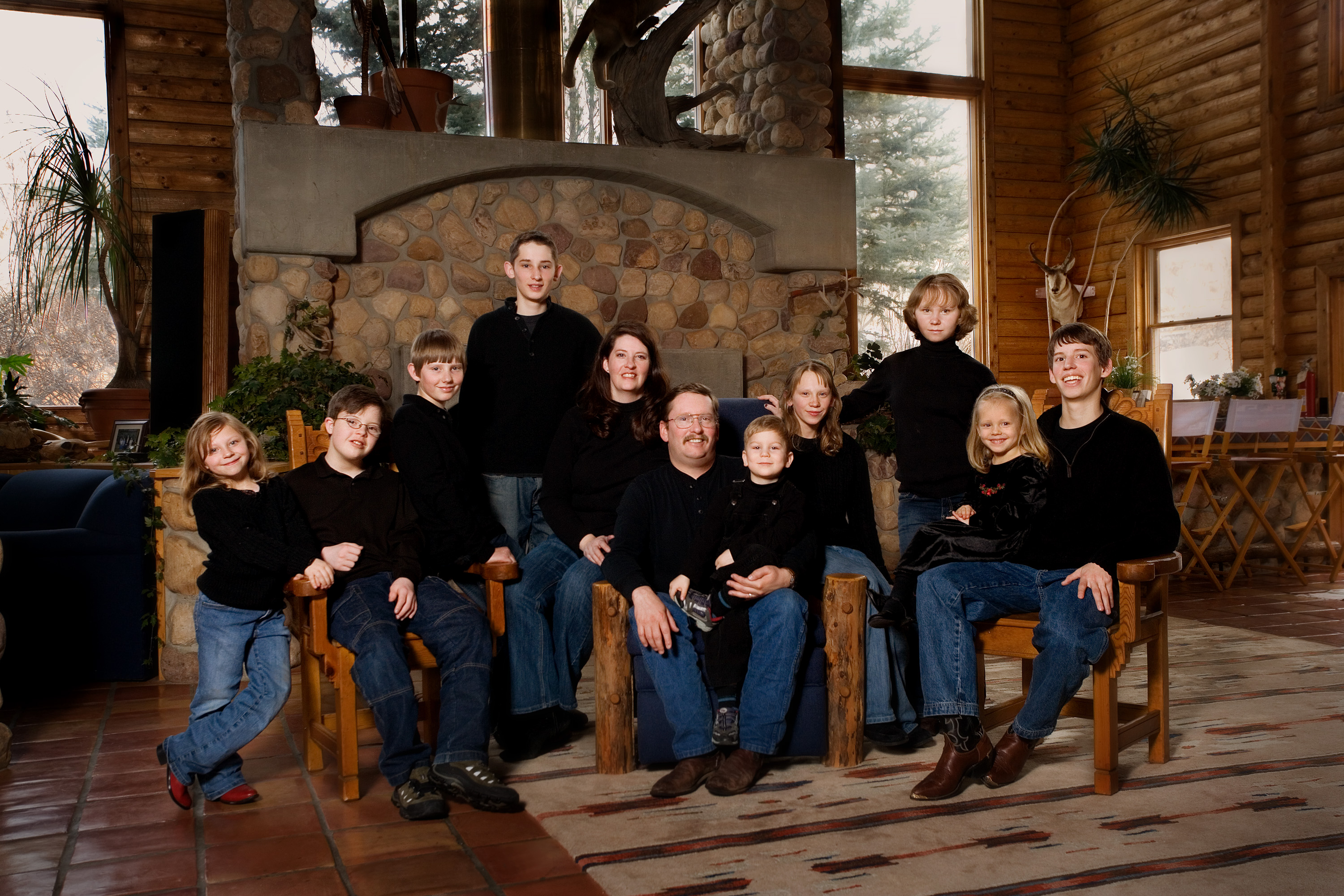
Amy and I have three biological children and six adopted ones in our family. Parenting that many children should clue you in on the fact that there is some mental illness in the home, if only on my part. I like to tell people that we’re an “R” rated version of the Brady Bunch, struggling to get a PG-13 rating. Some of those challenges come from mental illness, but our family has learned that mental illness is like other illness.
In earlier homes, members of our family experienced just about any form of abuse a normal functioning brain could imagine. No one could have lived through what some of my daughters have experienced without suffering mental illness.
It quickly became apparent that mental illness is like other illness. There are varying degrees and symptoms between sufferers, and everyone is at least a little bit different in how the illness affects them.
We were just finalizing the adoption of two pre-school aged Russian sisters when we learned that they had sisters in other orphanages. It took another eighteen months to find and adopt the siblings who were fourteen and fifteen at the time of adoption. When the oldest children arrived home, we began to learn a whole new vocabulary when it came to mental health. Both girls had serious developmental delays, but that was the least of the problems. Since initially we didn't understand that mental illness is like other illness, it was extremely difficult. We were dealing with the results brought on by Post Traumatic Stress Disorder, Reactive Attachment Disorder, Fetal Alcohol Syndrome, Borderline Personality Disorder, and a stream of other syndromes, disorders and conditions that were discussed as possibilities but never actually diagnosed.
It quickly became apparent that mental illness is like other illness. There are varying degrees and symptoms between sufferers, and everyone is at least a little bit different in how the illness affects them. There were good days and bad days. There were times when it looked like we were making progress and other days when we were helplessly tossed about on the waves of a perfect storm.
Psychologists and therapists were hired. We got the kids help at school. There were several bouts with one of our daughters going into and out of mental hospitals. Finally, there was no way to protect the family and our oldest daughter from herself without having her removed from the home and institutionalized. There was simply no other choice. Psychologists told us that the other children couldn’t progress, or even function, with the conditions that they were forced to endure around our daughter who struggled the most in our home.
Because mental illness is like other illness, the best progress is made with doctors and other professionals who specialize in the particular illness.
Amy and I continued to be Mom and Dad. We visited our daughter weekly in several different places over the span of more than six years. We talked with her on the telephone and had other contact with her as well. There were times when our daughter received our contact with open arms. There were others when she would scream at the top of her lungs that she hated us and demanded that we never visit or talk to her again. We always went back. Eventually, sometimes after multiple weekly attempts, she would calm down and allow us to try to build and rebuild our relationship with her.
Because mental illness is like other illness, the best progress is made with doctors and other professionals who specialize in the particular illness. Psychiatrists constantly worked with our daughter trying to dial in the medications that were most likely to help her. Psychologists and therapists were relentless in helping her to understand and utilize tools she needed to deal with the complex emotions a person feels when they have witnessed siblings beat until there is brain damage, and another, intentionally lit on fire.
I gave up hope. I remember friends telling me that I had witnessed miracles, before, and that I needed to have faith. I remember the well-intended but poorly received words that with God, all things were possible. Since mental illness is like other illness, I drew comparisons and lashed out. “Perhaps,” I said, “it is possible for a paraplegic to be healed. Perhaps it is possible. But I’ll tell you this: Possible or not, it is definitely not probable. If you end up with spinal cord damage, you had better start planning for the probable, not what might be possible!”
Because mental illness is like other illness, it gets worse when it doesn't receive the proper treatment.
Though I gave up hope, Amy and I never gave up trying; we never stopped parenting. We continued to visit with our daughter. If she had terminal cancer, we wouldn't have left her alone whether we thought she could get better, or not. Since mental illness is like other illness, even though I had given up hope for a cure, I stood by my daughter. We never hesitated to help her put the pieces back together when she would violently tear down the walls. I didn’t believe that my daughter would ever be able to live a reasonable life. Still, we had made a commitment when we adopted her. We owed it to her to do everything we could to help her. Failure could never be because we had not done our part. Besides, her condition would become worse with more abandonment. The reason she struggled so much was because she had gone so long without treatment. Because mental illness is like other illness, it gets worse when it doesn't receive the proper treatment.
It was discouraging. It was tiresome. It was draining. There were times when Mom needed a break and I would take over for a week. There were times when Amy needed to cover while I recharged my batteries. But we stayed with it. We trudged up the mountain with me never believing we could reach the summit.
Psychiatrists, psychologists and therapists as well as staff members where my daughter lived and went to school, continued in their pursuit of helping her to achieve goals. About eighteen months ago, our daughter started to show significant improvement. There were a few minor setbacks, but the crash I was always waiting for didn’t come.
My oldest daughter just turned twenty-two. She has advanced to the point where she was able to resume contact with the rest of the family. She has been able to visit in our home. Now, plans are even being made for what my daughter’s life will be like beyond an institutional setting. She says that she is glad she came to “Amérika.” She says that the most important thing to her is her family. And then she asks me to forgive her. No, Princess. It is I who needs forgiveness. I’m sorry I doubted you. You deserved better parenting than I gave you.
Mental illness is ruthless. I can think of no challenge that has been more difficult for our family to endure. There has been nothing that comes close to causing the amount of pain and suffering that our daughter experienced because of mental illness.
If you have a family member who suffers from mental illness, I know at least a little bit about how you feel. I know how hard it is to keep climbing the mountain with no assurance that you will ever reach the summit. Still, if I could tell you one thing, after everything I have learned, it would only be this; don’t give up hope. But if you do give up hope, never give up trying. Mental illness is like other illness. You never know how it will turn out if you treat it as carefully as you can.
Your comments matter. Please scroll down and share your thoughts!
Read more blog articles by John M. Simmons about Disorders/Mental Illness
Return to John M. Simmons’ Blog
Ensure you don’t miss anything by signing up for Our Weekly Newsletter. This is all you need to be qualified for occasional giveaways like the Kindle Fire that Kristy Goulart won in July!
Thank you for taking time to share your thoughts. Comments like this make me feel like the time I spend writing is worthwhile.
John