Natasha's Parents Cared for Me
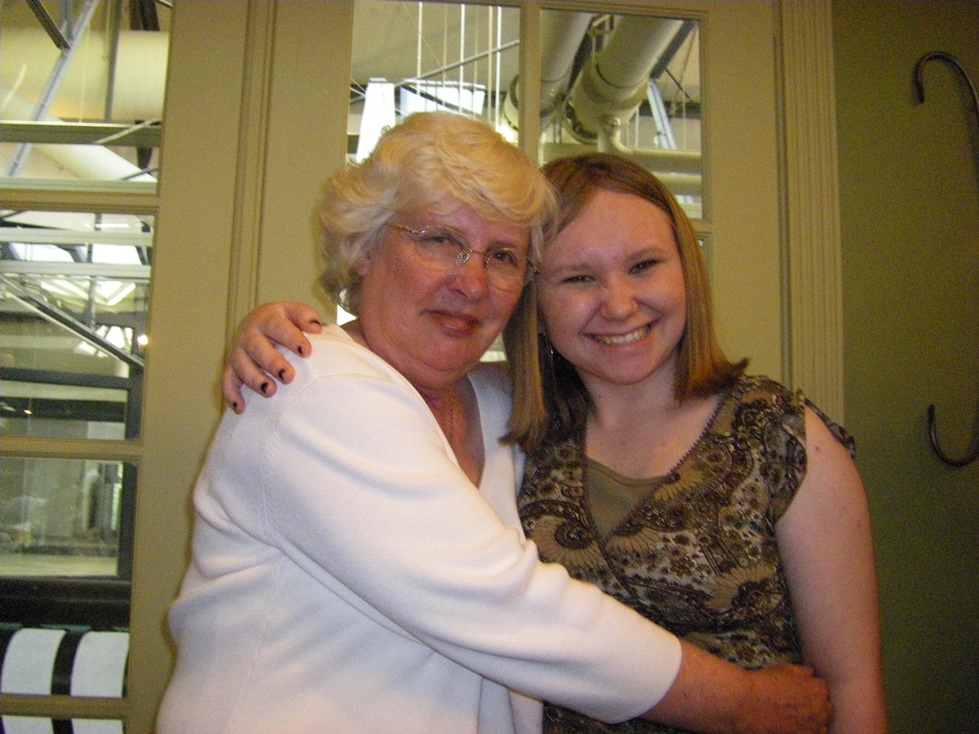
Emily with her grandmother, my mother, Sharen SImmons
In the orphinige people been mean to me. But girl, Natasha, she very nice. Her parents let me stay her house over night like Friday to Monday. Her parents treated me to dinner and make me feel loved, happy, caring. Natasha girl orphinige love me like sister. I treated them respect. I never had family before like girl from orphanage. Her mom and dad very nice. They been respectful. In the orphinige kids been rude to girl orphinige came to orphinige. And did like school work. After Natasha did school work she went home to sleep . First time before, first time they be nice to kids, Natasha’s parents. . I wish my parents loved me like Home Girl from orphinige. I never thought that my American parents never love me, now they do . I just want kids be happy. And also I want Home Girl be happy with parents. I do love my family for always. My parents show me how I want to treat my kids, with respect, love, care. In Russia, family been poor . American family support me more than Natasha. . Family didn’t helping me out because they poor, not have any money. Natasha, Home Girl she have a good family. They support her. Even Natasha’s family not have any money or they been poor they still nice to me. Even though my parents very abusive, but Natasha’s parents very caring and nice. Natasha Home Girl’s parents did all they could to give shelter, money, love. Natasha parents give Orphinige Girl she always talk to me. Natasha never give up to her home family. Natasha always respectful to others. But me never respectful, before like Natasha . Natasha went with me grab potatoes from the ground . Natasha always eat potatoes with me in the orphinige. Orphinige kids been mean to Home Girl Natasha. The staff at Emily’s group home helps her with grammar and spelling for her blog article. Some of them try to preserve her speech and grammar as much as possible, while others will help her every step along the way. Both ways are done for the right reasons. The one type keeps the story more original and helps you to see Emily’s education level and where she would have been had she aged out of the system. A Russian speaking tutor that we hired when Emily and Annie first came home, said that after only three months, their English was better than their Russian had ever been. So, preserving Emily’s words as best as possible helps you to see how challenged some of these kids would be, aging out of institutional care and onto the streets. (Emily was fifteen and a half when she came home, only six months away from aging out of the system). Some of Emily’s staff members like to help her make the article cleaner and plainer so that she feels more comfortable with the presentation. That makes her feel less self-conscious. You will see both presentations as you read Emily’s blog. I will always use brackets to clarify as much as I can, when needed. As I asked Emily, this week, what the message behind the story was, she told me that people who don’t have much money (like Natasha’s family) can still help people by having them in their homes and teaching them about good families, by their example. I hope that you are learning as much from Emily’s blog as I am. If nothing else, it is a glimpse into a very different world.
All of Emily’s blogs
Back to John M. Simmons’ blog
Comments
Leave a comment